The following is based on a communication sent by the UN Special Rapporteur on Human Rights Defenders and other UN experts to the Government of Sudan on 24 November 2025. The communication remained confidential for 60 days before being made public, giving the Government time to reply. Regrettably, the Government did not reply within this timeframe. If a reply is received, it will be posted on the UN Special Procedures communications database.
Since the sending of the communication, the Special Rapporteur received information that Abdelwahab Ahmed Mohamed Hashem had been released from detention on 25 December 2025, in alleged poor health due to prison conditions. The human rights defender reportedly remains under surveillance.
This is a shorter version of the original communication.
BACKGROUND
Topic: the arbitrary detention and mistreatment in prison of human rights defender Abdelwahab Ahmed Mohamed Hashem, also known as “Bob”.
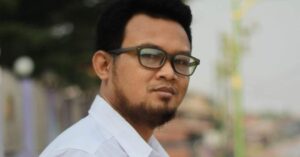
Mr. Abdelwahab Ahmed Mohamed Hashem is a human rights defender, union organizer and leader of the Workers Coordination Committee, an independent body representing public sector employees in North Kordofan state. He is widely known in his community for his work in defence of worker rights and his independence from political influence.
Concerns regarding the arrest and alleged arbitrary detention of human rights defenders have been raised in several previous communications sent to the Sudanese Government by special procedures mandate holders, including SDN 2/2025; SDN 4/2024; SDN 1/2023; SDN 3/2022; SDN 2/2022; and SDN 4/2021. We thank the Government for its reply to SDN 2/2022. We regret that no response has been received to the remainder of the cited communications.
ALLEGATIONS
Background information regarding the case of Mr. Hashem
Mr. Hashem was arrested and detained briefly in August 2022, linked to his uncovering of alleged corruption by the-then governing authority of North Kordofan regarding unpaid worker salaries. He was not charged.
On or around 19 September 2025, Mr. Hashem circulated a voice message on a private WhatsApp group that included some 500 public sector employee representatives in North Kordofan. In the message, Mr. Hashem raised concerns about the lack of payment of employee salaries for 16 months and called for workers’ rights to be protected and for those demanding their rights to be free from intimidation or political retaliation.
Arrest and detention
On 23 September 2025, Mr. Hashem, unusually, did not appear online, nor did he answer phone calls.
On 25 September 2025, after Mr. Hashem was held in incommunicado detention for two days, his family received a verbal message from him, delivered by a visitor to a detainee reportedly sharing a cell with him to inform them that he had been detained. He did not provide any more information.
On 4 October 2025, two of Mr. Hashem’s close relatives obtained permission from the Sudanese Armed Forces General Intelligence Service to visit him. They met him alone in the intelligence service office where he appeared tired and thinner. He told them that on 23 September 2025, armed men from the Sudanese Armed Forces General Intelligence Service presented an official arrest warrant and took him from his office in the town of el-Obeid, the capital of North Kordofan state, and brought him to the general intelligence service office. He said that he was held in a cell at the general intelligence building together with alleged common criminals, and that he had been interrogated by general intelligence service members on the content of his voice message to the WhatsApp group. His relatives brought him clothing and medication for his health conditions.
On 7 October 2025, two other close relatives of Mr. Hashem were allowed to visit him at the intelligence service building, where they waited for one hour before he was brought in to see them. He told them he had been taken to el-Obeid Central Prison on 5 October 2025 where he is being held in a small, crowded cell with alleged common criminals. He said that he was interrogated another two times, on the same voice message to the WhatsApp group.
On 10 October 2025, his relatives provided the prison with a blanket, clothing and more medication for him. He had complained of [redacted].
On 14 October 2025, Mr. Hashem’s son posted about his father’s arrest and arbitrary detention on his social media. The post was widely picked up due to Mr. Hashem’s known position in North Kordofan.
On 15 October 2025, on 18 October 2025 and on 20 October 2025, intelligence officials rejected three family visit requests and have not accepted their delivery of medication for him. Mr. Hashem remains held in el-Obeid Central Prison, without access to his family since 7 October 2025 or to necessary medication. He has not been charged with any criminal offence since his arrest, nor has he undergone legal procedures other than the interrogations by general intelligence members.
CONCERNS
In the communication, we express our deep concern at the arrest and arbitrary detention without charge, as well as enforced disappearance of Mr. Abdelwahab Ahmed Mohamed Hashem. We are concerned that these measures may have been taken in retaliation for his human rights work on behalf of workers’ rights. We are also concerned at the lack of access to his family or to the outside, in clear contradiction with article 9 of the Universal Declaration of Human Rights and with the United Nations Standard Minimum Rules for the Treatment of prisoners (the Nelson Mandela Rules). We wish to recall that incommunicado detention may amount to enforced disappearance and highlight that regardless of the duration of an enforced disappearance, it produces serious harm and consequences for the disappeared and their families. Enforced disappearance also presents practical challenges regarding the protection of victims and defending their rights. It is equally concerning that Mr. Hashem’s lack of access to necessary medical treatment may also amount to ill-treatment or torture.
If confirmed, the facts alleged would appear to contravene, among other norms, the International Covenant on Civil and Political Rights, which Sudan acceded to on 3 August 1990, in particular articles 7, 9 14, 16, 19 and 22 read alone and in conjunction with article 2(3), on the right not to be subjected to torture or to cruel, inhuman or degrading treatment or punishment, right to liberty and security, guaranteeing the right to promptly inform anyone arrested of the reasons and the charges against them, right to prompt access to an impartial and independent judicial authority as well as to be informed of the charges brought against the detainee, the right to recognition everywhere as a person before the law, safeguarding freedom of expression and guaranteeing the right to form and join trade unions with no restrictions placed other than those prescribed by law. They would also be in contradiction with the Convention on the Freedom of Association and the Right to Organise as well as the Convention to the Right to Organise and Collective Bargaining, which Sudan ratified on 17 March 2021 and 18 June 1957 respectively. We also we wish to recall the International Convention for the Protection of All Persons from Enforced Disappearance which Sudan acceded to on 10 August 2021, in particular articles 2 and 17.