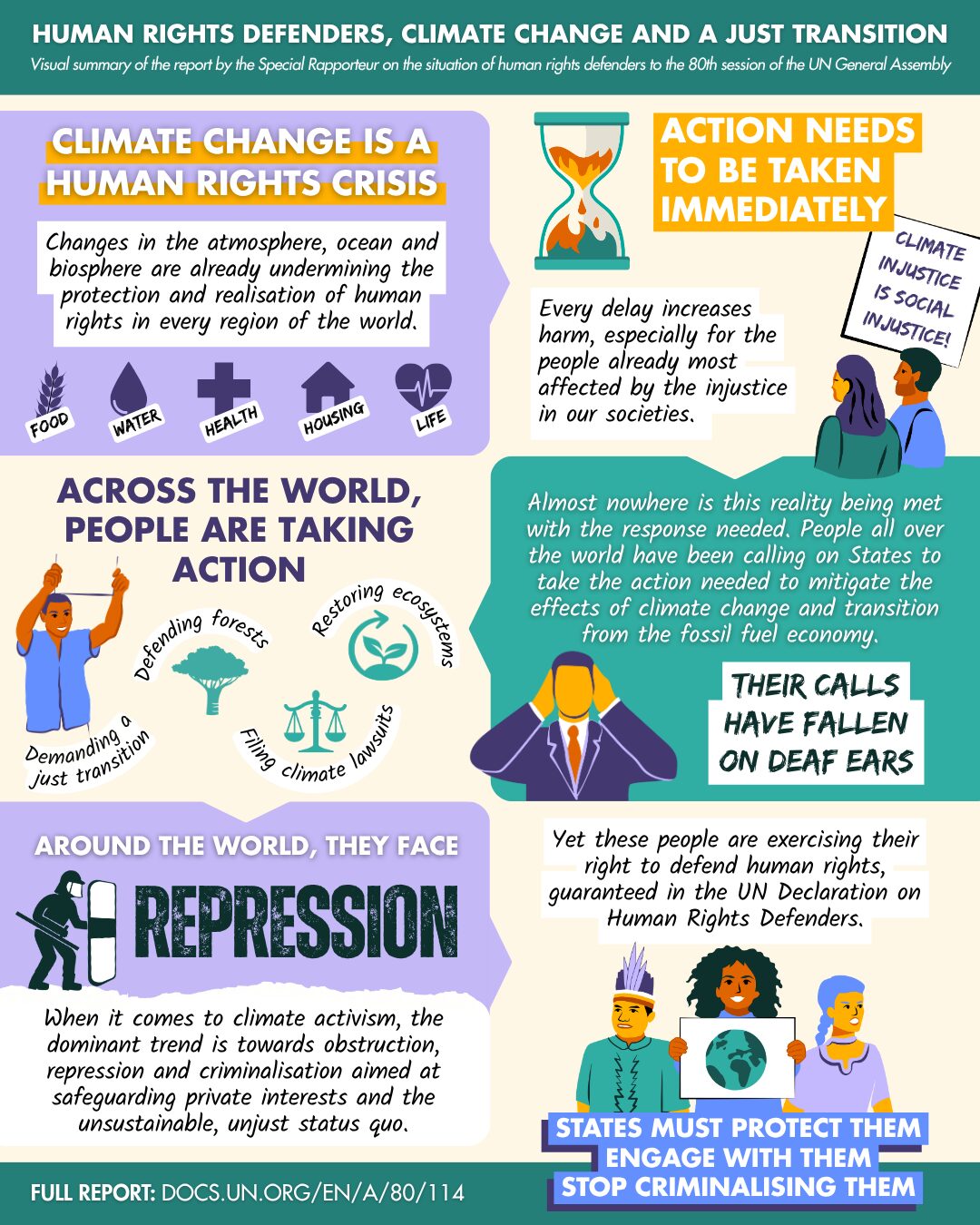
Climate change is a human rights crisis. We can see it all around us, in our communities, towns and countries, and it has now been confirmed beyond any doubt by the landmark advisory opinions of the International Court of Justice and the Inter-American Court of Human Rights, following that of the International Tribunal on the Law of the Sea.
Changes in the atmosphere, ocean and biosphere caused by man-made emissions are already undermining the protection and realisation of human rights for people in every region of the world. That includes the rights to food, clean drinking water, health, housing and life. Without rapid and far-reaching action by States to reduce emissions now, global warming will continue to increase, and with it, the devastatingly negative effects on human rights will multiply.
People all over the world have been calling on their governments to take the action needed to mitigate the effects of climate change for decades. They have been making the link between climate change and human rights, and advocating for a just transition – one that preserves the possibility of the full realisation of human rights for all.
As their calls have fallen on deaf ears, and the climate crisis and all its risks have spiralled, they have found new energy and ways to protest and organise, as the gravity of the situation has demanded.
These people are exercising the right to defend human rights. They are human rights defenders and should be supported and engaged with by States as such.
On 16 October 2025, the Special Rapporteur presented a report to the UN General Assembly examining contributions by human rights defenders to addressing climate change and achieving a just transition, as well as the backlash they have faced for the work they do, and lays out key recommendations and trends.
In the lead up to the UN General Assembly, the Special Rapporteur invited human rights defenders working on climate change and a just transition to share their insights, experience and hope in guest blogs. They are listed below.