The following is based on a communication written by the UN Special Rapporteur on Human Rights Defenders and other UN experts to the Government of Kyrgyzstan on 14 July 2025. The communication remained confidential for 60 days before being made public, giving the Government time to reply. Regrettably, the Government did not reply within this time frame. If a reply is received it will be posted on the UN Special Procedures communications database.
Since the communication was sent, Ms. Mamyrkulova has filed an appeal against the sentence, and the appeal is reportedly pending before the court. Ms. Rahman (Karasartova) has been found guilty under articles 278 (mass riots) and 327 (public calls for violent overthrow of power) of Kyrgyzstan’s Criminal Code and sentenced to 5 years’ probation and a fine of 50,000 som (around 486 EUR).
This is a shorter version of the original communication.
BACKGROUND
Topic: the alleged arbitrary detention and criminal prosecution of Ms. Rita Rahman, also known as Rita Karasartova, and of Ms. Kanyshai Mamyrkulova that appear to be linked to their peaceful human rights public advocacy and exercise of their freedom of expression online.
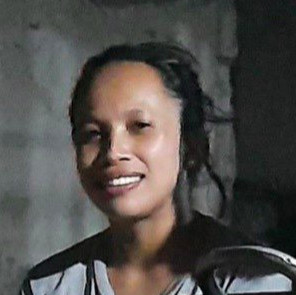
Ms. Rita Rahman is a woman human rights defender and a prominent expert in civic governance. She is the leader of the human rights organisation and think tank “Institute of Civic Analysis” which monitors the transparency of the judicial system in Kyrgyzstan and provides independent legal analysis of various democratic governance topics. Ms. Rita Rahman was one of the first women human rights defenders in the Kyrgyz Republic to publicly report in the Kyrgyz language on challenges faced by the law enforcement and judicial systems in the country.
Ms. Kanyshay Mamyrkulova is a journalist who, in 2019, founded the information support agency ‘MCA-TV’. She is also the founder and a presenter within the media project ‘Public Discussion’ and is a former General Director of the “Asman-TV Corporation”. In recent years, she has worked as a freelance journalist and has been active on social media criticizing those in power and State policies.
We previously wrote to the Government of Kyrgyzstan raising concerns of judicial persecution against journalists, human rights defenders, and critics of the Government sent on 30 July 2024 (AL KGZ 2/2024) and 15 March 2024 (AL KGZ 1/2024). We thank the Government for its replies dated 27 September 2024 and 4 July 2024. Nonetheless, we remain concerned that several victims mentioned in these communications were found guilty and imprisoned and others who were acquitted continue to face restrictions on their freedom of movement.
ALLEGATIONS
Concerning the case of Ms. Rita Rahman
On 14 April 2025, at approximately 9 p.m., Ms. Rahman was arrested by the Main Department of Internal Affairs (GUVD) of the Chui region, after at least 12 male police officers, including three armed and masked special forces police officers, allegedly conducted a house search of the woman human rights defender’s home without a judicial sanction. During the search, it is reported that the officers seized all electronic devices belonging to Ms. Rahman and her children as well as all documents found on the premises. A defence lawyer reportedly arrived at the house of Ms. Rahman twelve minutes after the search had begun, after he was reportedly informed of the search by Ms. Rahman’s colleagues. According to information received, the police reportedly invoked article 212 part 9 which allows for unsanctioned searches only in exceptional cases where there are real fears that the searched object can be hidden or used for criminal purposes or if a person wanted by the police may flee from justice. In such instances, under the Criminal Procedure Code, the police are obliged to inform the court so that it can verify the legality of the search. It is unclear whether this procedure was followed.
Ms. Rahman was reportedly not home at the time of the raid but was instead apprehended outside a shopping mall by a male police officer who allegedly seized the woman human rights defender’s phone without a warrant and escorted her back to her home. Following the search, the woman human rights defender was then allegedly forced to get into the car of her defence lawyer, accompanied by a police officer who instructed the lawyer to drive to the Main Department of Internal Affairs (GUVD) of the Chui region.
Upon arrival at the station at 9 p.m. on 14 April 2025, Ms. Rahman was then reportedly interrogated for two hours in the presence of her lawyer.
According to the information provided, Ms. Rahman is accused of “preparation of a crime” and “the organisation of mass disorder accompanied by violence, pogroms, arson, destruction of property, use of firearms, explosives or explosive devices, or armed resistance to a representative of the authorities” under articles 36 and 278 of the Criminal Code of the Kyrgyz Republic. Article 278 is punishable by imprisonment for a term of five to ten years.
The charges against Ms. Rahman are reportedly based on an allegation that she was an accomplice of an organized crime group associated with a political activist for whom she posted a letter on her Facebook page on 14 April 2025. The letter was an apology made by the activist to his family for having risked their lives as a consequence of his activism and in pursuit of justice and the rule of law in the Kyrgyz Republic. Ms. Rahman had reportedly been asked to do so by the activist should anything happen to him or should he disappear.
Ms. Rahman was reportedly questioned about this letter during her interrogation by the GUVD who alleged that the letter had been published as “a signal for the start of the mass disorder/riots”. According to the information received, the interrogation largely focused on the woman human rights defenders’ personal views and attitude towards the authorities and high-level State officials of the Kyrgyz Republic. The GUVD is also alleged to have unlocked Ms. Rahman’s mobile, recording this in the protocol, and examined her messages including those exchanged with the aforementioned activist.
At 2 a.m. on 15 April 2025, five hours after Ms. Rahman’s detention began rather than the three hours stipulated by law, the GUVD investigator issued a Resolution on Ms. Rahman’s detention categorizing her status as a suspect for a period of 48 hours from the moment her detention began. According to the Resolution, the woman human rights defender was to be transferred to the temporary detention facility (IVS) of the Department of Interior of the Issyk-Ata District in the city of Kant which is located 25 kilometres from Bishkek.
Both Ms. Rahman and her lawyer were then reportedly asked to sign the Resolution in line with the Criminal Procedure Code which they did. According to the information received, however, this Resolution did not contain all of the required information as foreseen in article 97 part 2 of the Criminal Procedure Code, namely, the grounds and motives for Ms. Rahman’s detention. Further, the GUVD investigator allegedly refused to show Ms. Rahman or her lawyer the existing case materials, claiming that there were classified documents in the file. The GUVD investigator also allegedly attempted to force the woman human rights defender to sign a written promise to respect the secrecy of the pretrial investigation thereby preventing her from sharing with the public any information related to her criminal case. Ms. Rahman and her lawyer reportedly refused to sign this document.
While still located at the GUVD, Ms. Rahman was reportedly subjected to a body search carried out by a male police officer. At approximately 3 a.m. on 15 April 2025, she was reportedly taken to the fourth national hospital in Bishkek for a medical examination in order to document any signs of ill-treatment as prescribed by the internal Regulations for placement of persons into IVS of the Ministry of Internal Affairs, before being brought to the IVS in Kant at approximately 6 a.m.
On 16 April 2025, Ms. Rahman was taken to the Sverdlovskiy District Court for her remand hearings. According to the GUVD investigator’s motion before the court, Ms. Rahman “was part of an organized crime group and was involved in the preparation of explosives and recruitment of new members for the group in conspiracy with other human rights defenders and journalists”.
This remand hearing lasted from 7 p.m. on 16 April 2025 until 1 a.m. on 17 April 2025. Only five or six close relatives and five of Ms. Rahman’s lawyers were allowed to attend the hearing and media and other members of the public were forced to wait outside the courtroom. When asked by Ms. Rahman’s lawyers to explain what exactly Ms. Rahman was being accused of, why these alleged wrongdoings warranted her detention, and whether any forensic expert examination of the seized documents and electronic gadgets had been completed, the GUVD investigator told the judge that there were secret materials in the case file and refused to show either the judge or Ms. Rahman’s lawyers the documents.
Ms. Rahman’s lawyers also raised with the judge several other procedural violations that were committed prior to the remand hearing, including the failure by the investigative judge to adopt a Resolution accepting the case for judicial consideration, and the investigator’s and the judge’s failure to provide Ms. Rahman with an interpreter into the Kyrgyz language, as per the motions submitted by her. After the judge ignored Ms. Rahman’s lawyers’ concerns about the committed procedural violations, the lawyers motioned to recuse the judge. However, this motion was also rejected by the judge himself, and the remand hearing continued.
On 16 April 2025, the ruling of the investigative judge pronounced that Ms. Rahman’s arrest was unlawful due to the committed violations of procedural safeguards foreseen by article 97 of the Criminal Procedure Code of the Kyrgyz Republic but was nevertheless justified. According to the information received, the judicial ruling from 16 April 2025 had ignored article 100 of the Criminal Procedure Code of the Kyrgyz Republic that requires judges to release people from detention if such detention is illegal due to the committed violations of article 97 of the Criminal Procedure Code. Despite this ruling, Ms. Rahman was remanded in pre-trial detention until 12 May 2025.
For the second remand hearing on 30 April 2025, Ms. Rahman was brought to the court by the police convoy of the GUVD of Bishkek. She was not handcuffed during the court hearing but was held behind metal grids without justification, despite not being accused of violent acts or posing a flight risk. The metal grids were surrounded by an all-male convoy, who actively obstructed the family members from taking photos/videos of Ms. Rahman, even though the national legislation does not prohibit such photographing or video recording prior and after the actual court session. The remand hearing lasted from 5 p.m. until 7 p.m. Only close relatives were allowed to be present whilst other members of the public and the media were forced to remain outside of the courtroom. The justification provided by the judge was that there was a lack of seats in the courtroom to accommodate the public and the media.
On 30 April 2025, the Sverdlovskiy District Court supported the motion of the investigator and the prosecutor to extend pre-trial detention on Ms. Rahman until 12 June 2025. During this second remand hearing, Ms. Rahman lawyers claimed that her remand custody was neither legal nor justified.
On 13 May 2025, upon appeal, the Bishkek City Court left unchanged the initial 16 April 2025 decision of the investigating judge of the Sverdlovskiy District Court that had found that arrest of Ms. Rakhman was illegal but nevertheless was justified. This appeal hearing was substantially delayed. It was held after the initial remand custody had been already extended on 30 April 2025 for an additional period of one month, thus effectively rendering the appeal null and void.
On 29 May 2025, upon second appeal, the Bishkek City Court’s judicial panel which was comprised of three judges, rejected Ms. Rahman’s lawyers’ appeal against the 30 April 2025 ruling of the Sverdlovskiy District Court. During this appeal, Ms. Rahman’s lawyers reportedly requested to replace Ms. Rahman’s custodial measure of restraint with an alternative non-custodial measure, such as a written undertaking not to leave, bail, electronic monitoring or house arrest. The prosecutor allegedly did not provide any substantiated replies to the legal arguments raised by Ms. Rahman’s lawyers. During the remand hearing the investigator reportedly would not provide the woman human rights defender’s legal team with any materials supposedly related to Ms. Rahman’s case, claiming that the requested materials were with the forensic experts.
On 9 June 2025, Ms. Rahman’s pretrial detention was reportedly extended until 12 July 2025, after the investigative judge at the Sverdlovskiy District Court ruled in favour of the motion submitted by the investigator of the Chui Region’s Department of Internal Affairs, who justified the pretrial detention’s extension by the necessity to conduct investigative activities. Each of the requests and complaints made by Ms. Rahman and her legal team were dismissed by the judge, reportedly, without proper justification.
For this hearing on 9 June 2025, Ms. Rahman was brought to the court from SIZO-1 for the court session scheduled for 5.30 p.m. She was allowed to confidentially confer with her lawyer. The hearing itself did not start until 7.15 p.m. and the judge claimed that the hearing was delayed because Ms. Rahman’s lawyers could not be located, even if though they had reportedly been sitting in the court’s corridor since 5 p.m. During the hearing, Ms. Rahman was again placed behind metal grids. Ms. Rahman’s relatives and independent observers were allowed to attend the hearing. The court session lasted more than four hours.
Neither Ms. Rahman nor her lawyers were provided with a copy of the investigator’s motion in advance of the hearing. Therefore, the session was suspended for 30 minutes after the judge granted Ms. Rahman’s legal representative’s request to give the lawyers time to familiarize themselves with the investigator’s motion.
During examination of the investigator’s motion and other presented files, Ms. Rahman’s lawyers discovered that none of the materials were duly registered and processed by the court’s chancellery as they lacked a court stamp confirming the date of their submission to the court, there was no required written order of the court’s chair referring these materials to a concrete investigating judge, and no corresponding court order to confirm the acceptance of these materials for the court proceedings. These irregularities were flagged to the judge by Ms. Rahman’s legal team, but they were nonetheless admitted.
During the court hearing, the police investigator confirmed that between 14 April 2025 until 9 June 2025 no investigative activity had been carried out into Ms. Rahman’s case. According to article 115 part 3 of the Criminal Procedure Code “in case of establishing during a court hearing of the fact of the lack of any investigative activities during the period of application of the pretrial detention as the restraint measure the judge is obliged to replace detention with a non-custodial measure of restraint”. The investigative judge and the prosecutor refused to take this into consideration.
On 19 June 2025, the Sverdlovskiy District Court held a hearing to review five complaints made by Ms. Rahman’s lawyers regarding the investigators alleged failure to conduct any investigative activities during the continued pretrial detention of Ms. Rahman. Additionally, a complaint was made against the staff of the pretrial detention center who obstructed Ms. Rahman’s contact with her family during her alleged placement in an unknown facility for four days to test for tuberculosis.
During this hearing, the court’s convoy allegedly obstructed the work of journalists and video recording before the start of the hearing, reportedly acting on the direct order of head of the Department of Security and Convoy. The prosecutor and the investigator failed to appear in court. Ms. Rahman’s lawyers motioned to recuse the judge due to the lack of impartiality, as the judge did not provide them with an opportunity to voice their objections. The judge dismissed all motions of the defense lawyers and without hearing the objections of the lawyers, postponed the court review of the lawyers’ complaints until 27 June 2025.
According to the information received, right before her arrest on 14 April 2025, Ms. Rahman underwent serious dental surgery and still had stitches that needed to be removed in a specialized private dental clinic. Reportedly, on 23 April 2025, following requests from her defense lawyers, Ms. Rahman was taken to a private clinic to remove her stitches. Ms. Rahman also suffers from a series of chronic diseases which require ongoing medical treatment.
Concerning the case of Ms. Kanyshai Mamyrkulova
On 5 March 2025, an internal report of the Main Department of the State Committee for National Security (SCNS) addressed to the Main Department of Investigations of the SCNS allegedly stated that according to the available information on Facebook, the SCNS had noted a Facebook page under the username “Kanyshai Mamyrkulova” that was systematically publishing materials of a provocative nature targeting leaders of national State authorities, which had been forming grievances among users of the Internet community.
On 11 March 2025 at 12.00 a.m., a report was reportedly filed in the Registry of Recording of Information (ZHUI) by a senior operative officer of the GUVD which stated that “the GUVD received a proactive report from an operative officer of the Service of Countering Extremism and Illegal Migration of the Bishkek Main City Department of Internal Affairs (the GUVD) that during the monitoring of internet sites, Instagram application, Facebook and TikTok, he noted various protest expressions regarding the exchange of territories along the border between the Kyrgyz Republic and the Republic of Tajikistan. These protest expressions aim at misleading the citizens of the Kyrgyz Republic.” The Report allegedly further stated that there was a probability of destabilization of social situation aimed at smearing of State authorities of the Kyrgyz Republic and intensification of political situation in the days preceding the planned state visit of President of Tajikistan on 12-13 March 2025. This report allegedly served as the basis for screenshots of Ms. Mamyrkulova’s social media posts to be submitted by the GUVD for the State-solicited complex religious and linguistic expert examination by a forensic expert of the State Forensic Service under the Ministry of Justice.
On 14 March 2025, the SCNS reportedly solicited a State-appointed forensic philological-linguistic expert review. The expert opinion concluded that the presented online materials contained linguistic characteristics aimed at the incitement of ethnic and inter-national enmity.
On the same date, 14 March 2025, the State Committee for National Security (SCNS) opened a criminal case under article 330 part 1 of the Criminal Code of the Kyrgyz Republic accusing Ms. Kanyshai Mamyrkulova of “actions aimed at inciting racial, ethnic, national, religious or interregional enmity (discord), humiliation of national dignity,” as well as “propaganda of exclusivity, superiority or inferiority of citizens on the grounds of their attitude to religion, nationality or race, committed in public or through the mass media or the Internet” which is punishable by a fine of 1,000 to 2,000 indices or up to five years imprisonment.
On 19 March 2025, the Ministry of Interior reportedly launched a second investigation under article 278 part 3 of the Criminal Code of the Kyrgyz Republic accusing Ms. Kanyshai Mamyrkulova of “calls for active disobedience to the lawful demands of representatives of the authorities and for mass disorder, as well as calls for violence against the citizens” which is punishable of five to seven years imprisonment. This case was allegedly opened on the basis of the conclusions made by the forensic expert of the State Forensic Service under the Ministry of Justice appointed on 14 March 2025.
On 20 March 2025, at approximately 3 p.m., several male operative officers of the GUVD of Bishkek arrested Ms. Mamyrkulova in front of her apartment block. Ms. Mamyrkulova had allegedly been called by a man expressing interest in buying her apartment and came outside to greet the caller when she was arrested. According to information received, the arresting officers did not present an arrest warrant before allegedly forcibly removing Ms. Mamyrkulova and transferring her to the GUVD station.
At the GUVD station in Bishkek, Ms. Mamyrkulova was reportedly denied her right to call her family or contact her lawyer. She was reportedly neither informed of the charges against her nor her rights. From approximately 3.45 p.m. to 4.40 p.m. on the same date, 20 March 2025, Ms. Mamyrkulova was reportedly questioned as a witness without the presence of her lawyer. Allegedly, during this interrogation Ms. Mamyrkulova confirmed that the posts on 38 screenshots presented to her by the GUVD investigator during the interrogation were indeed written by her.
Ms. Mamyrkulova’s lawyer was allowed to see her at approximately 5 p.m. that day. Shortly after, at 5.06 p.m., the woman human rights defender was charged of “calls for mass disorder” under article 278 of the Criminal Code of the Kyrgyz Republic. Immediately after the charges were presented, Ms. Mamyrkulova was placed into a temporary detention facility of the Bishkek GUVD (IVS) in line with the issued Resolution of the detention by the GUVD investigator. This Resolution recorded her arrest as 3 p.m. of 20 March 2025. Before placing her into the IVS cell, the GUVD police officers took the woman human rights defender to the fourth national hospital where she underwent a medical examination. After the hospital, the GUVD officers took Ms. Mamyrkulova back to the IVS of the GUVD and she was placed in the IVS cell for 48 hours awaiting her remand hearing in court.
During this time, Ms. Mamurkulova was not provided with the necessary hygienic items, which she required due to her severe [redacted] and other health conditions.
On 22 March 2025, Ms. Mamyrkulova appeared before the Sverdlovskiy District Court of Bishkek escorted by an all-male GUVD convoy. She was not handcuffed but stayed behind the metal bars during the hearing. The remand hearing lasted from 12.40 p.m. until 6 p.m., and was held behind the closed doors, without any reasonable justification provided by the judge. During this hearing, the Bishkek GUVD investigator filed a motion with the investigating judge of the Sverdlovskiy District Court of Bishkek to apply a custodial measure of restraint against Ms. Mamyrkulova until 19 May 2025. The GUVD investigator requested that the Court rule on the legality and justification of Ms. Mamyrkulova arrest that took place on 20 March 2025. The woman human rights defender’s lawyer’s request that the hearing be open to the public was denied due to the alleged ‘secrecy of the investigation.’ The lawyer’s request to have the judge recuse himself was also denied.
The judge concluded that the arrest of Ms. Mamyrkulova was to be recognized as lawful and justified. The woman human rights defender was therefore sanctioned with two months pretrial detention until 19 May 2025.
On 26 March 2025, Ms. Mamyrkulova’ lawyers submitted appeals to the Bishkek City Court requesting that this decision to recognize the legality and justification of the arrest of the woman human rights defender be overruled and that she be released.
On 9 April 2025, Ms. Mamyrkulova appeared before the Bishkek City Court which was presided by a panel of three judges (two male judges and one female judge). The judges rejected both appeals of lawyers and recognized the arrest and pre-trial detention of Ms. Mamyrkulova as lawful and justified. During this court hearing, Ms. Mamyrkulova was kept in a glass box, heavily guarded by an all-male convoy.
In parallel, on 9 April 2025, the investigative judge of the Sverdlovkiy District Court of Bishkek reviewed a complaint filed by Ms. Mamyrkulova herself in which she asked the court to recognize actions of the GUVD investigator as unlawful – namely, subjecting her to the interrogation on 20 March 2025 as a witness, rather than as a suspect. The complaint of Ms. Mamyrkulova was dismissed by the investigative judge. Ms. Mamyrkulova herself was not present for this hearing.
On 17 April 2025, it is reported that the GUVD investigator made a request to the Sverdlovskiy District Court of Bishkek asking that the apartment of Ms. Mamyrkulova, where she has been residing together with her adult daughter, be used as collateral for potential fines that might be imposed.
Around 25 April 2025, the criminal case against Ms. Mamyrkulova was transferred to the Oktiabrskiy District Court of Bishkek. On 28 April 2025, Ms. Mamyrkulova’s lawyer requested that this court review her pretrial detention and replace it with the non-custodial measure of restraint.
On 30 April 2025, a preliminary court hearing on the main case against Ms. Mamyrkulova was held in the Oktiabrskiy District Court of Bishkek. During this preliminary hearing, the judge considered the woman human rights defender’s lawyers’ motion to change the measure of restraint against Ms. Mamyrkulova. Her lawyer presented to the court several medical reports and certificates as evidence of grave health condition and serious chronic diseases of Ms. Mamyrkulova. Despite her severe health condition, as well as the presented documented proof of the upcoming wedding date of her only daughter scheduled for 24 May 2025, the judge denied the request to release Ms. Mamyrkulova from pretrial detention by replacing custodial restraint measure with an alternative one such as house arrest, written undertaking not to leave the city, electronic monitoring, or bail.
On 14 May 2025, Ms. Mamyrkulova was brought from the pre-trial detention center (SIZO-1) to the Oktiabrskiy District Court in Bishkek for the main hearing of her case. The hearing was not held due to the failure of the Oktiabrskiy District Prosecutor to appear, with only a verbal excuse provided that the prosecutor was otherwise occupied with vocational training.
On 21 May 2025, Ms. Mamyrkulova was again brought from SIZO-1 to take part in the scheduled court hearing. She was put behind the metal grids with heavy male convoy around it. At the beginning of the court session, Ms. Mamyrkulova’s lawyers again resubmitted a motion to change Ms. Mamyrkulova’s measure of restraint to a non-custodial one due to her poor state of health, and yet again provided the judge with relevant medical documentation. However, the judge again rejected the motion. This hearing was made open to the public and was attended by relatives, civic activists, NGOs, and representatives of OHCHR and Embassies who were allocated two short benches. The presiding judge also permitted the media to videorecord the court session, except for faces of the judge and the prosecutor. This hearing was again postponed when the forensic linguistic expert failed to appear for the hearing on the basis that he was allegedly summoned to the SCNS.
On 4 June 2025, Ms. Mamyrkulova appeared before the Oktiabrskiy District Court. During this hearing, Ms. Mamyrkulova’s lawyers challenged the competence and impartiality of expert witnesses provide by the State including the State forensic linguistic expert. The woman human rights defender’s lawyers argued that the posts authored by Ms. Mamyrkulova did not contain any content that would constitute incitement to enmity or public calls for mass. Ms. Mamyrkulova’s legal team also argued that the factual circumstances should be the decisive factor during the trial, and not vague probabilities projected by law enforcement or experts using.
On 17 June 2025, the trial was delayed until 26 June 2025 due to the failure of the State forensic linguistic expert to appear in court, and the failure of the prosecutor to ensure his attendance. As the judge did not officially open the court session, the defense lawyers were unable to file their motions, including regarding the release of Ms. Mamyrkulova under non-custodial pretrial restraint measures due to her serious health problems.
On 26 June 2025, the trial was delayed again until 30 June 2025 when the State forensic linguistic expert failed to appear in Court again. This was also the case on 30 June 2025.
On 3 July 2025, Ms. Mamyrkulova was sentenced to six years’ imprisonment based on articles 278 and 330 of the Criminal Code, which was replaced by four years on probation. The woman human rights defender was ordered to remain under house arrest for 30 days until the sentence enters into legal force after which she will be required to check in at the probation office twice a month for four years. During the period in which she is under house arrest, Ms. Mamyrkulova is prohibited from posting on social media networks and from leaving her home between 10 p.m. and 6 a.m. Throughout her sentence, Ms. Mamyrkulova is also prohibited from publishing content online that is in opposition to public order and authority, travelling outside of the county, and is required to notify the probation authorities of any change of address and participate in the probation authority’s programmes. If the woman human rights defender breaches these conditions, she may be remanded in custody.
Ms. Mamyrkulova’s lawyers and the Prosecutor’s Office have been given 30 days to appeal this sentence.
CONCERNS
In the communication, we express our concern regarding the arrest and pretrial detention of Ms. Rahman and Ms. Mamyrkulova, that appear to be directly connected to their work as woman human rights defenders and their legitimate exercise of freedom of expression. We are particularly concerned about allegations that Ms. Rahman was not informed of the charges against her or that she was being questioned as a suspect after having been led to believe she was a witness in an unspecified criminal investigation. Of further concern are the allegations that the Resolution of detention signed by Ms. Rahman and her lawyer did not contain all of the required information, namely the grounds and motives for the woman human rights defender’s detention.
We are additionally concerned about the fact that Ms. Mamyrkulova was arrested and allegedly forcibly taken to the GUVD building after leaving her home under the impression that she was meeting someone interested in buying her apartment. We are similarly concerned about allegations that Ms. Mamyrkulova was denied access to her lawyer, that she was initially questioned as a witness without the presence of her lawyer or knowledge of the charges against her, and that she was denied the necessary hygienic products required by her chronic health condition. We are also concerned about the alleged use of pretrial detention allegations that the judges hearing both cases appear to have consistently rejected numerous motions of the woman human rights defender’s lawyers without providing justification.
We are further concerned about the growing trend of activists, bloggers and journalists in Kyrgyzstan who are facing criminal charges over social media posts critical of authorities. We are concerned that these cases are often based on vaguely defined Criminal Code’s provisions, such as those organizing mass disorder, or public calls for “disobedience” to officials and mass disorder (article 278), public calls for the forceful seizure of power (article 327), and “incitement” to ethnic or other enmity (article 330). In most cases, charges rely exclusively or primarily on assessments by State-appointed forensic experts engaged by law enforcement and or the State Committee for National Security, some of whom lack the necessary qualifications to carry out such expert examinations. Such cases and practices create a profound chilling effect, deterring citizens from freely expressing their opinions or carrying out their work as journalists, lawyers, or social activists.